
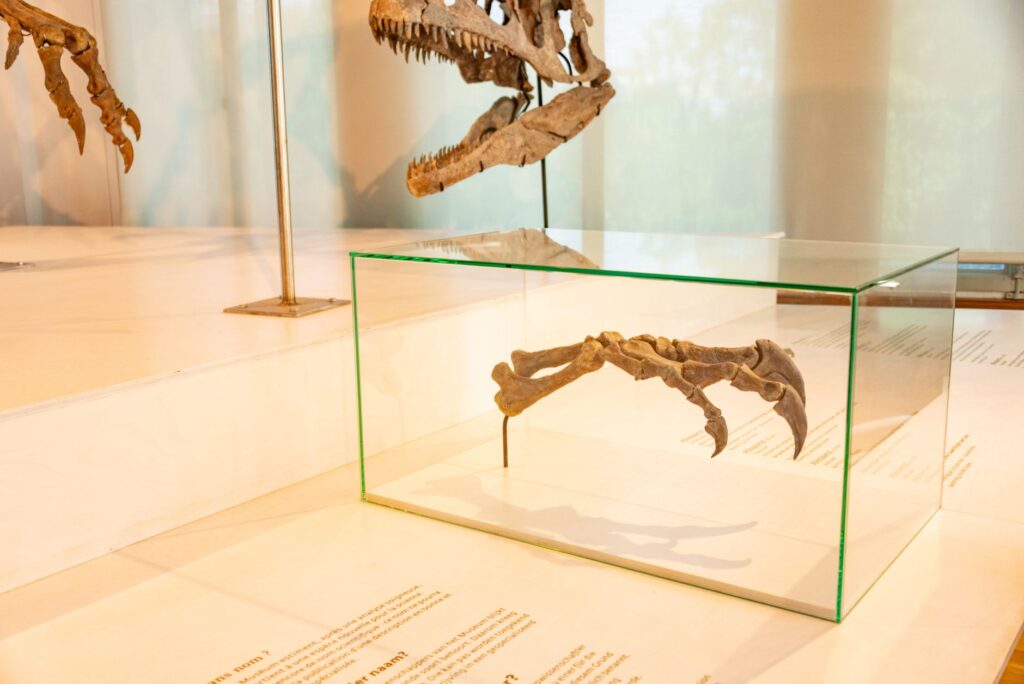
The Dinodontosaur discovery has captivated scientists and enthusiasts alike. This remarkable ancient creature, known for its unique features, offers a glimpse into the distant past of our planet.
What is a Dinodontosaur?
The Dinodontosaur is an ancient creature that lived during the Triassic period, approximately 240 million years ago. This fascinating animal is characterized by its unique features, which include a robust body resembling that of a large pig and a distinctive beak akin to that of a turtle.
Dinodontosaurs were herbivorous reptiles, and their adaptations suggest they were well-suited for a life of grazing on the vegetation that flourished during their time. Their beak allowed them to efficiently slice through tough plant material, while their strong jaws aided in chewing fibrous food. The discovery of this creature sheds light on the diversity of life that existed in prehistoric ecosystems.
Researchers have identified several key characteristics of dinodontosaurs:
- Size: They could grow to impressive lengths, making them one of the larger reptiles of their era.
- Body Structure: Their stout, muscular build provided stability and strength.
- Diet: As herbivores, they played a significant role in their environment by influencing plant growth.
- Geological Significance: Their fossils have been found in sedimentary rocks, indicating their widespread presence across ancient landscapes.
The dinodontosaur discovery not only adds to our understanding of prehistoric life but also prompts further research into the evolutionary pathways of reptiles.
Key features of the Dinodontosaur
The Dinodontosaur, an ancient creature that roamed the Earth around 240 million years ago, possesses several remarkable features that distinguish it from other prehistoric animals. This unique creature is often described as a “huge pig with a turtle’s beak,” highlighting its unusual combination of traits.
Some of the key features of the Dinodontosaur include:
- Size: The Dinodontosaur was a large animal, with some estimates suggesting it could weigh over 1,000 pounds, making it one of the larger terrestrial reptiles of its time.
- Beak: Its distinctive beak, reminiscent of that of a turtle, indicates a specialized diet. The beak allowed the Dinodontosaur to grasp and manipulate vegetation effectively.
- Dentition: The creature had unique teeth that were well-adapted for grinding plant material, which suggests it was herbivorous and likely fed on tough, fibrous plants.
- Posture: The Dinodontosaur displayed a robust, low-slung body with sturdy limbs, indicating it was well-equipped for both movement and stability on land.
These features not only highlight the Dinodontosaur’s adaptability to its environment but also provide insight into the evolutionary path of early archosaurs. The discovery of this creature adds to our understanding of prehistoric life and the diversity of ancient ecosystems.
Significance of the discovery
The recent Dinodontosaur discovery has significant implications for our understanding of prehistoric life and the evolution of early terrestrial ecosystems. This ancient creature, known for its unique features, sheds light on the diversity of life during the Triassic period.
One of the primary reasons this discovery is so important is that it offers insight into the evolutionary adaptations of herbivorous reptiles. The Dinodontosaur displays a combination of traits that suggest it played a unique role in its environment. Its robust body and specialized beak indicate that it could efficiently process tough vegetation, providing clues about the types of plants that dominated its habitat.
Moreover, the fossilized remains found in the recent excavation are some of the most complete examples of their kind, allowing paleontologists to make more accurate assessments of size, morphology, and lifestyle. This level of preservation is rare and contributes significantly to the fossil record, bridging gaps in our knowledge about the transition of reptiles from primarily carnivorous diets to herbivory.
- Highlights the evolutionary transition in reptiles.
- Provides evidence of diverse herbivorous species in the Triassic.
- Offers a clearer picture of ancient ecosystems and their food webs.
Ultimately, the Dinodontosaur discovery not only enriches our understanding of this particular species but also enhances our overall comprehension of evolutionary history during a critical period in Earth’s past.
How was the Dinodontosaur found?
The discovery of the Dinodontosaur was the result of a collaborative effort among paleontologists who were exploring a remote region known for its rich fossil deposits. This area, located in what is now Brazil, has long been a hotspot for uncovering ancient species from the Triassic period.
During an extensive excavation, researchers uncovered a series of well-preserved fossils. These remains included a remarkably intact skull, which exhibited unique features such as a beak-like structure reminiscent of a turtle’s. The size and shape of the fossils led scientists to believe they had stumbled upon a significant find, later identified as the Dinodontosaur.
The excavation team utilized a combination of traditional paleontological techniques and modern technology. Among the methods employed was ground-penetrating radar, which helped identify potential fossil sites beneath the surface. This innovative approach allowed the team to uncover a larger area of fossils than previously expected.
Moreover, the collaborative nature of the project fostered a unique environment for knowledge exchange. Experts from various disciplines, including geology and evolutionary biology, came together to analyze the findings. This multidisciplinary approach not only enriched the understanding of the Dinodontosaur discovery but also highlighted the importance of teamwork in paleontological research.
- Location of the discovery: Brazil
- Significant fossil features: Skull with turtle-like beak
- Techniques used: Ground-penetrating radar
Comparisons with other prehistoric creatures
The recent Dinodontosaur discovery has sparked interest among paleontologists, particularly in how this ancient creature compares to other prehistoric animals. Dinodontosaurs are noted for their unique morphology, which includes a beak-like structure reminiscent of modern-day turtles and a robust body akin to large mammals.
When comparing the Dinodontosaur with other prehistoric reptiles, one cannot overlook its similarities with the Wukongopterus. While the Wukongopterus is known for its gliding capabilities, the Dinodontosaur showcases adaptations for a terrestrial lifestyle, suggesting a different ecological niche. Additionally, both creatures exhibit a blend of features that highlight the evolutionary experimentation of their time.
Another interesting comparison can be made with theropod dinosaurs, which were primarily carnivorous. Unlike theropods, Dinodontosaurs were herbivorous, indicating a divergence in dietary habits that would have influenced their survival strategies. Their adaptations for processing tough plant material signify a specialized evolutionary path, distinct from the predatory adaptations seen in many theropods.
This juxtaposition of the Dinodontosaur with its contemporaries not only emphasizes its unique characteristics but also enhances our understanding of the diversity of life during the Triassic period. As more discoveries are made, further insights into the relationships between these ancient species will continue to unfold.
Future research on Dinodontosaurs
The recent discovery of the Dinodontosaur has opened new avenues for future research, shedding light on the evolution and lifestyle of this ancient creature. Scientists are particularly interested in understanding its ecological role during the Triassic period, a time when the Earth was undergoing significant climatic changes.
Future research efforts will likely focus on several key areas:
- Dietary habits: Analyzing the wear patterns on the teeth of Dinodontosaurs may provide insights into their diet and feeding behavior, helping to reconstruct their place in the prehistoric food web.
- Habitat preferences: By examining fossilized remains in various geological contexts, researchers aim to determine the preferred habitats of Dinodontosaurs and how these environments influenced their development.
- Growth patterns: Studying growth rings in bones may reveal information about their life cycle and longevity, contributing to a better understanding of how they adapted to changing conditions.
- Paleoecological interactions: Investigating the relationships between Dinodontosaurs and other contemporary species will help clarify their role in the ecosystem and how they interacted with other fauna.
As more fossils are uncovered, the Dinodontosaur discovery promises to enrich our knowledge of ancient life and the evolutionary pathways that shaped the modern world.
The recent Dinodontosaur discovery has shed light on the evolutionary history of these fascinating creatures. Researchers are eager to explore the implications of the Dinodontosaur discovery for our understanding of prehistoric ecosystems.
Photo by Diego F. Parra on Pexels
Sources
AI Tool for Cell Evolution: Proven Smart Technology · Zaheer Khan coach Chennai Super Kings: A Smart Move for CSK · Nothing India spin-off: Best Proven Strategy for Growth